NatusAI
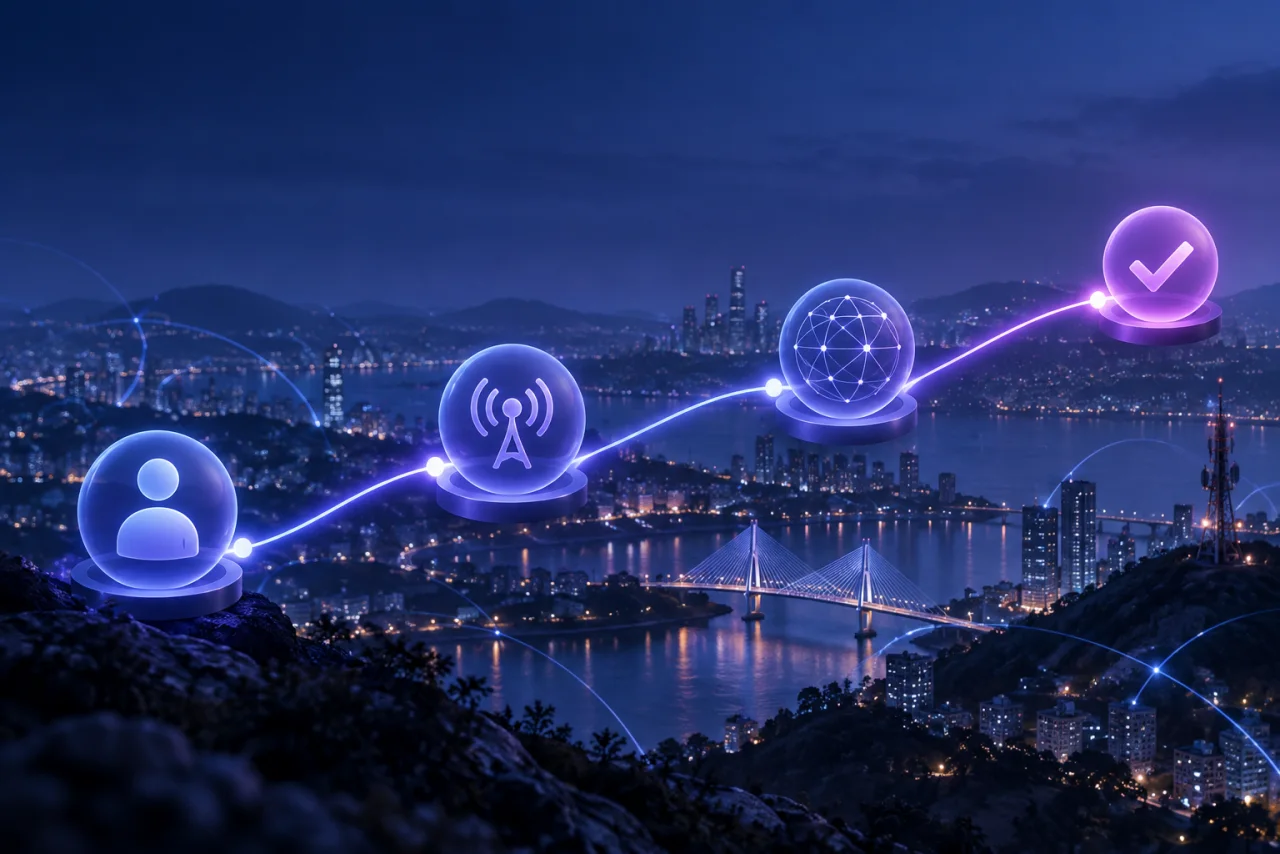
Delivered · client result
Telecommunications · Customer service
A European telecommunications operator
Customer-service automation that turned 3–5 day response times into hours, with complex cases routed to people.
View use case

Connect customer questions, business knowledge and approved actions. Routine emails are answered faster from approved knowledge, routine tasks complete within agreed limits, and exceptions go to your team.
Support teams answer the same kinds of questions every day, while the answer is spread across policies, product information and earlier conversations.
Language models and robotic process automation prepare or carry out routine steps, within boundaries your organisation sets.
Understand
Classify the request and gather the relevant customer and business context.
Prepare
Draft a response or task using the sources and rules the organisation has approved.
Complete
Route it for review or carry out a defined action, with the activity recorded for the team.


For a head of customer service, the value is time back for complex cases, without losing control of what is sent.
Consistent answers. Responses draw on approved knowledge, so customers get the same answer from every agent.
Routine work moves itself. Defined tasks complete within agreed limits, and every action is recorded.
Exceptions go to people. Anything outside the rules goes to your team for review.
Our delivered telecom project (AI for telecom customer service, a client result) shows how the approach works in practice, with measured results.
What you can buy today: a delivery engagement led by our team, built on the engine proven in our client projects, with NatusAI Lyra interfaces. Products marked Roadmap show where the platform is going; we share dates under NDA.
Status: reference scenario, not a client result. For a delivered, measured example, see the telecom customer-service case.
Delivered · client result
Telecommunications · Customer service
Customer-service automation that turned 3–5 day response times into hours, with complex cases routed to people.
Reference scenario
Marketing
Generative AI that knows your products, audiences and past campaigns. Your team approves what goes live.

Capability pattern
Any document-heavy team
Find the right document by exact term or by meaning in one search, inside your infrastructure.
More answers on deployment, governance and pricing in our FAQ.
Only within limits you agree. Responses are drafted from approved sources, defined actions run within agreed boundaries and are recorded, and anything outside the rules goes to your team.
Yes, in a related form: our telecom customer-service case is a delivered, measured example. This page describes a reference scenario, not a client result.
The ones your organisation approves: policies, product information and previous interactions. A language model drafts each response grounded in them.
Bring a sample of recurring enquiries. We will show which could be answered from approved knowledge, which tasks could complete themselves, and where people must stay in the loop.
Or write to contact@natusai.com